The Cost of Vision: When Seeing Leads to Suffering | Daily Readings | May 9, 2025

May 9, 2025 – Daily Catholic Lectionary Readings for Friday of the Third Week of Easter.
Experience the dramatic encounter between Saul and the risen Christ on the Damascus road. Discover the profound connection between gaining spiritual vision and accepting suffering for what we’ve seen.
Today’s reflection reveals:
- God’s sobering words to Ananias: “I will show him how much he must suffer for my name”
- How Paul’s greatest witness emerged from his deepest suffering
- The pattern of death and resurrection in both Saul’s conversion and Jesus’ Eucharistic teaching
- What it means for us to accept the cost of clearer spiritual vision
Readings covered: Acts 9:1-20; Psalm 117:1bc, 2; John 6:52-59
Perfect for anyone experiencing challenging transitions, struggling with rigid thinking, questioning the purpose of suffering, or seeking deeper understanding of how weakness becomes strength in God’s economy.
#CatholicDailyReadings #BibleStudy #PaulConversion #SufferingWithPurpose #BreadOfLife
The Cost of Vision: When Seeing Leads to Suffering
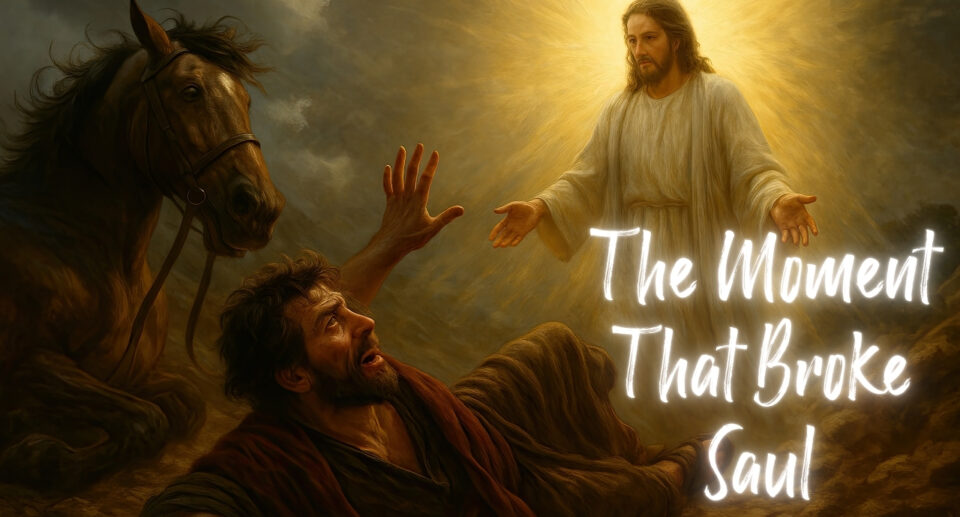
“Saul, Saul, why are you persecuting me?”
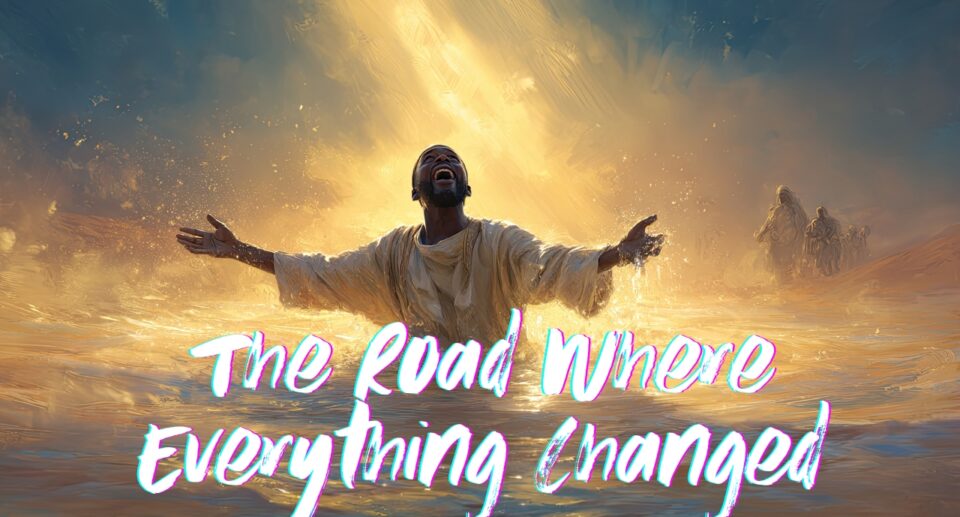
The question pierces through blinding light on the Damascus road. A man who thought he saw clearly is suddenly plunged into darkness. A voice addresses him by name—twice—with an accusation that will reorder his entire existence.
Then comes the pronouncement that will define the rest of his life: “I will show him how much he must suffer for my name.”
Today’s readings explore a profound paradox at the heart of discipleship: sometimes our greatest vision follows our deepest blindness, and the privilege of seeing truth carries the cost of suffering for it. They challenge us to consider not just what we see, but what we’re willing to suffer for what we’ve seen.
In our first reading, Saul of Tarsus embodies religious certainty. Armed with official letters and institutional backing, he “breathed murderous threats” against followers of “the Way.” His zealous persecution of Christians flowed from what he believed was perfect vision—clear understanding of God’s law and boundaries.
Then comes the disruption—light flashing, voice questioning, companions speechless. In an instant, Saul’s physical blindness becomes the outward manifestation of his spiritual condition. The one who thought he saw clearly is revealed to be profoundly blind to divine reality.
For three days, Saul sits in darkness, neither eating nor drinking. The pattern resembles Jesus’ three days in the tomb—a symbolic death that must precede resurrection. Saul’s religious identity, his certainties, his mission—all lie in ruins as he waits, helpless and dependent, for what comes next.
What comes next is Ananias—a name that means “God is gracious.” Despite his fear of Saul’s reputation, Ananias obeys divine instruction after hearing the sobering words about Saul’s future: “I will show him how much he must suffer for my name.” The first words Saul hears from the community he sought to destroy are words of kinship: “Brother Saul.” The hands laid upon him are not hands of vengeance but of healing.
“Something like scales fell from his eyes, and he regained his sight.” The physical healing mirrors spiritual transformation. What falls away are the scales of religious certainty, cultural superiority, and rigid boundaries. What emerges is new vision that will enable Saul—soon to be Paul—to see Christ where he once saw only enemies.
But this new vision comes with a cost plainly stated in God’s words to Ananias: “I will show him how much he must suffer for my name.” Paul’s ministry will be marked by beatings, imprisonments, shipwrecks, rejection, betrayal, and eventually martyrdom. The one who caused suffering will now suffer. The persecutor becomes the persecuted. The scale of his suffering will match the scale of his mission—to take the gospel “before Gentiles and kings and before the people of Israel.”
This theme—seeing truth leads to suffering for truth—echoes through scripture. Jeremiah saw God’s word clearly and suffered rejection. Ezekiel saw divine glory and bore Israel’s punishment. Isaiah saw the Lord high and lifted up, then carried a message his people would reject. The pattern reaches its fulfillment in Jesus, who saw the Father perfectly and suffered perfectly in obedience.
Our psalm today responds with universal praise: “Praise the LORD, all you nations; glorify him, all you peoples!” The brevity of Psalm 117 (the shortest in the Psalter) belies its radical inclusivity. All nations, all peoples are called to glorify God—exactly the boundary-crossing mission that will cause Paul such suffering.
In today’s gospel, Jesus’ words about his flesh and blood provoke dispute: “How can this man give us his flesh to eat?” The challenge parallels the question of Saul’s conversion: How can this persecutor become apostle? How can this man’s suffering bring salvation? How can broken flesh give life?
Jesus doesn’t soften the disruption but intensifies it: “Unless you eat the flesh of the Son of Man and drink his blood, you do not have life within you.” This teaching will cause many disciples to leave (John 6:66). And here is the critical point: Jesus lets them go. He doesn’t call them back saying, “Wait, you misunderstood! I was only speaking symbolically!” He watches them walk away rather than dilute the literal truth of his words. If Jesus had been speaking metaphorically, surely he would have clarified to prevent losing followers over a simple misunderstanding.
What makes this passage so foundational to Christian faith is Jesus’ absolute insistence on the literal nature of his words. Four times in this short passage, he emphasizes that his flesh is “true food” and his blood is “true drink.” When his listeners question him, he doesn’t retreat to metaphorical language but doubles down with even more explicit language: “For my flesh is true food, and my blood is true drink.” These aren’t symbolic statements but sacramental realities that the early Church universally understood.
The Greek verbs Jesus uses are particularly revealing. He shifts from the common word for eating (φάγω, phagō) to a more visceral term (τρώγω, trōgō) that specifically means to chew, munch, or gnaw – language that deliberately emphasizes physical consumption and leaves no room for purely symbolic interpretation. This intensification of language shows Jesus’ determination to be understood literally, even at the cost of losing followers who couldn’t accept this teaching.
The understanding of the Eucharist as the Real Presence of Christ—his actual body and blood under the appearances of bread and wine—flows directly from these uncompromising words. Church Fathers across the ancient world—Ignatius of Antioch, Justin Martyr, Irenaeus, Cyril of Jerusalem—all affirmed this literal understanding in their writings. This wasn’t a later development but the original consensus of Christian communities. Today, this belief in the Real Presence continues in many Christian traditions, including Eastern Orthodox, Oriental Orthodox, Catholic, and some Anglican and Lutheran churches.
What might these readings say to our current moment? We live in a world where many claim perfect vision—absolute certainty about political, religious, or cultural truths. Like Saul before Damascus, this certainty often leads to “breathing murderous threats” against those who differ. Today’s readings suggest that true vision begins with blindness—with the humility to recognize our limited perspective.
They also warn that seeing truth carries a cost. In a culture that promises comfort and security, the words to Ananias are sobering: “I will show him how much he must suffer for my name.” Authentic discipleship still leads to suffering—perhaps not the physical persecution Paul endured, but certainly the discomfort of standing for truth when it’s unpopular, speaking for justice when it’s inconvenient, loving enemies when it’s counterintuitive.
Paul’s life following his conversion demonstrates the inseparable connection between vision and suffering. In 2 Corinthians 11:23-28, he catalogues his sufferings: imprisonments, floggings, near-death experiences, shipwrecks, dangers from every quarter, hunger, thirst, cold, and constant pressure of concern for the churches. Yet earlier in the same letter, he describes his ministry as making “the light of the knowledge of the glory of God in the face of Christ” visible to others (2 Cor 4:6).
For Paul, seeing and suffering weren’t contradictory but complementary. His clearest vision came through his deepest suffering. His most powerful witness emerged from his greatest weakness. His authority flowed not from institutional position but from willingness to be “poured out like a libation” (2 Tim 4:6) for the truth he had seen.
The historical context deepens these connections. Saul’s persecution of Christians occurred during a time when religious boundaries were being radically redrawn. His conversion came when the question of Gentile inclusion was dividing the early church. His suffering intensified as his mission expanded beyond traditional Jewish communities. The cost of his vision corresponded directly to the breadth of his witness.
Similarly, Jesus’ Eucharistic teaching in John 6 challenged fundamental categories for his Jewish audience. Consuming blood violated Mosaic law. Claiming to be bread from heaven seemed blasphemous. Promising eternal life through his flesh appeared absurd. The vision he offered required complete rethinking of religious categories—a disruption many found too costly to accept.
For us today, Paul’s story invites examination of both our vision and our willingness to suffer for it. Where might we need scales to fall from our eyes? What certainties blind us to divine reality? What boundaries limit our sight of Christ in others? And once we see more clearly, what price are we willing to pay for that vision?
Jesus’ teaching challenges us to recognize how divine life comes through sacrifice. The Eucharist we celebrate embodies this paradox—the broken becomes the whole, the sacrificed becomes the sustaining, the dying becomes the eternally living. When we receive the Eucharist, we don’t just recall Christ’s sacrifice symbolically; we participate in the reality of his body and blood. This understanding has been maintained from the earliest days of Christianity and continues in many Christian traditions that affirm, “In the most blessed sacrament of the Eucharist ‘the body and blood, together with the soul and divinity, of our Lord Jesus Christ and, therefore, the whole Christ is truly, really, and substantially contained.'”
Our participation in this mystery invites us into the same pattern of seeing and suffering that marked Paul’s life. We consume the One who suffered for us, and in doing so, accept our own call to suffer for others. The Eucharistic sacrifice and Paul’s apostolic suffering both reveal the same truth: love costs something. Vision demands response. Transformation requires surrender.
The final verses of our gospel reading connect Jesus’ self-giving with our own transformation: “Just as the living Father sent me and I have life because of the Father, so also the one who feeds on me will have life because of me.” The pattern continues through us—receiving vision, accepting suffering, offering ourselves so others might see.
Where is God inviting you to clearer vision today? What scales might need to fall from your eyes? And what suffering might accompany that new sight? These readings remind us that the privilege of seeing truth rarely comes without the cost of suffering for it—but like Paul, we may discover that our deepest suffering becomes the source of our most powerful witness.